
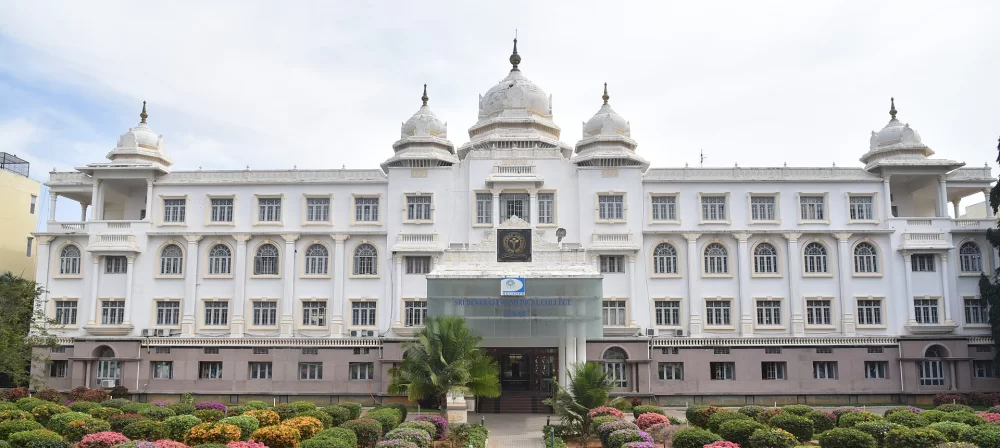
SDU Kolar MBBS Admission, Sri Devaraj Urs Medical College
SDU Kolar MBBS Admission, Sri Devaraj Urs Medical College, Kolar is a reputed deemed-to-be university located in Kolar, Karnataka. Established in 1986 and granted deemed university status in 2007, it is recognized by UGC and NMC.
SDU Kolar MBBS Admission, Overview
| Established | 1986 (Declared Deemed to be University in 2007) |
| University Type | Private. Deemed to be University |
| Recognized by | National Medical Commission (NMC) |
| Teaching Hospital | R L Jalappa Hospital & Research Center |
| No of MBBS Seat | 200 |
| Hospital Beds | 1200+ |
| Patient Flow | 1800/ Day |
| Bed Occupancy Rate | 80% |
| Counselling Body | MCC |
SDU Kolar MBBS Admission, Fee Structure 2026-27
Before taking, SDU Kolar MBBS Admission , it is important to understand the fee structure of KLE. Refer to the table below to find the detailed fee structure Sri Devaraj Urs Medical College, Kolar
| Management Quota Fee | NRI Quota FEE |
|---|---|
| 19,40,000 | $ 46,000 |
SDU Kolar MBBS Admission, Seat Matrix
| Management Seat | NRI Seat |
|---|---|
| 170 | 30 |
SDU Kolar MBBS Admission Through NRI Quota
Non-resident Indians are called NRIs. NRI students can enroll in the College with NRI fees, although the fees are slightly higher than normal tuition fees. Students who have a valid NRI certificate and have been verified by the university are eligible for NRI seats.
For admission assistance related to NRI quota admission, please fill the form below or tap to call. Our team will contact you as soon as possible. Sri Devaraj Urs Medical College, Kolar, 2026-27, Admission related enquiry-8178052363
SDU Kolar MD/MS CLICK HERE
SDU Kolar MBBS Admission Clinical Exposure with Complete Laboratory Training 2026-27
SDU Kolar MBBS Admission clinical exposure is a structured and progressive training process that transforms medical students from beginners into skilled and confident doctors. It combines classroom learning, laboratory practice, hospital postings, and real-time patient care over a period of 5.5 years, including a one-year compulsory internship. The goal of this training is to ensure that students develop strong diagnostic abilities, practical skills, ethical values, and professional confidence.
From the first year itself, students are introduced to early clinical exposure. They visit hospitals, observe doctors during ward rounds, and learn the basics of patient communication and professionalism. In the pre-clinical phase, laboratory learning plays a major role. In the Anatomy lab, students perform cadaver dissection and study human organs in detail. In the Physiology lab, they conduct experiments such as blood grouping, hemoglobin estimation, ECG recording, and lung function tests. In the Biochemistry lab, they learn to analyze blood sugar levels, liver function, kidney function, and other metabolic parameters. These laboratories build a strong scientific foundation necessary for clinical practice.
During the second year, students move into para-clinical and diagnostic laboratory exposure. In the Pathology lab, they examine blood smears, biopsy samples, and tissue slides to understand disease processes. In the Microbiology lab, they learn bacterial culture techniques, antibiotic sensitivity testing, and infection control practices. The Pharmacology lab trains them in drug mechanisms, dosage calculations, rational prescribing, and monitoring adverse drug reactions. Forensic Medicine exposure helps them understand medico-legal cases, injury analysis, toxicology, and postmortem procedures. This phase strengthens their understanding of how diseases are diagnosed and treated scientifically.
SDU In the clinical years, students are posted in major hospital departments such as General Medicine, General Surgery, Obstetrics & Gynecology, Pediatrics, Orthopedics, ENT, Ophthalmology, Dermatology, and Psychiatry. They learn history taking, physical examination, case sheet writing, clinical reasoning, and patient management. They observe and assist in surgeries, deliveries, and emergency procedures. Exposure to intensive care units (ICU), operation theatres, radiology departments (X-ray, CT scan, MRI), blood banks, dialysis units, and emergency services ensures that they gain real-time experience with modern medical technology.
The one-year compulsory internship is the most intensive phase of clinical exposure. Interns work directly with patients under supervision, manage emergency cases, assist in surgeries, conduct normal deliveries, perform minor procedures, and participate in community health programs. They also experience night duties and rural health postings, which enhance their practical skills and confidence.
Comprehensive clinical exposure combined with advanced laboratory facilities ensures that MBBS graduates develop strong diagnostic accuracy, effective communication skills, ethical decision-making ability, and the competence required for postgraduate studies or independent medical practice. A well-equipped teaching hospital with high patient inflow and experienced faculty plays a crucial role in providing high-quality clinical training.
In conclusion, MBBS clinical exposure with complete laboratory training forms the backbone of medical education. It bridges the gap between theory and practice, preparing students to become safe, skilled, and compassionate doctors ready to serve society
SDU Kolar Campus Life & Facility
- Central library with thousands of medical textbooks
- National and international medical journals
- E-library access and digital databases
- Quiet reading halls
- Research support and ethical committee guidance
- Students preparing for PG entrance exams benefit greatly from these resources.
SDU Hostel & Accommodation
- Most MBBS campuses offer separate hostels for boys and girls with:
- Furnished rooms
- 24-hour security
- Wi-Fi connectivity
- Mess facilities with hygienic food
- Study rooms
- Recreation areas
- Hostel life builds friendships, teamwork, and emotional support among students
Cafeteria & Basic Amenities
- Clean cafeteria and food courts
- ATM facilities
- On-campus stationery stores
- Transportation facilities
- Medical store and pharmacy
- These amenities ensure convenience and comfort for students.
SDU Kolar Official Website click here
Sri Devaraj Urs Medical College Kolar (SDU) Located
Tamaka, Kolar – about ~80 km from Bengaluru, Karnataka